
The Diputación renews 7.5 kilometres of the Huesna network as it passes through Tocina
Topics Diputación de Sevilla Los Rosales
The works, awarded for 14.26 million euros, replace the pipeline that runs through the urban centre of Tocina and aim to put an end to the recurring breakdowns in the north of the system. They began on October 12 and will last 16 months.
Redacción ·
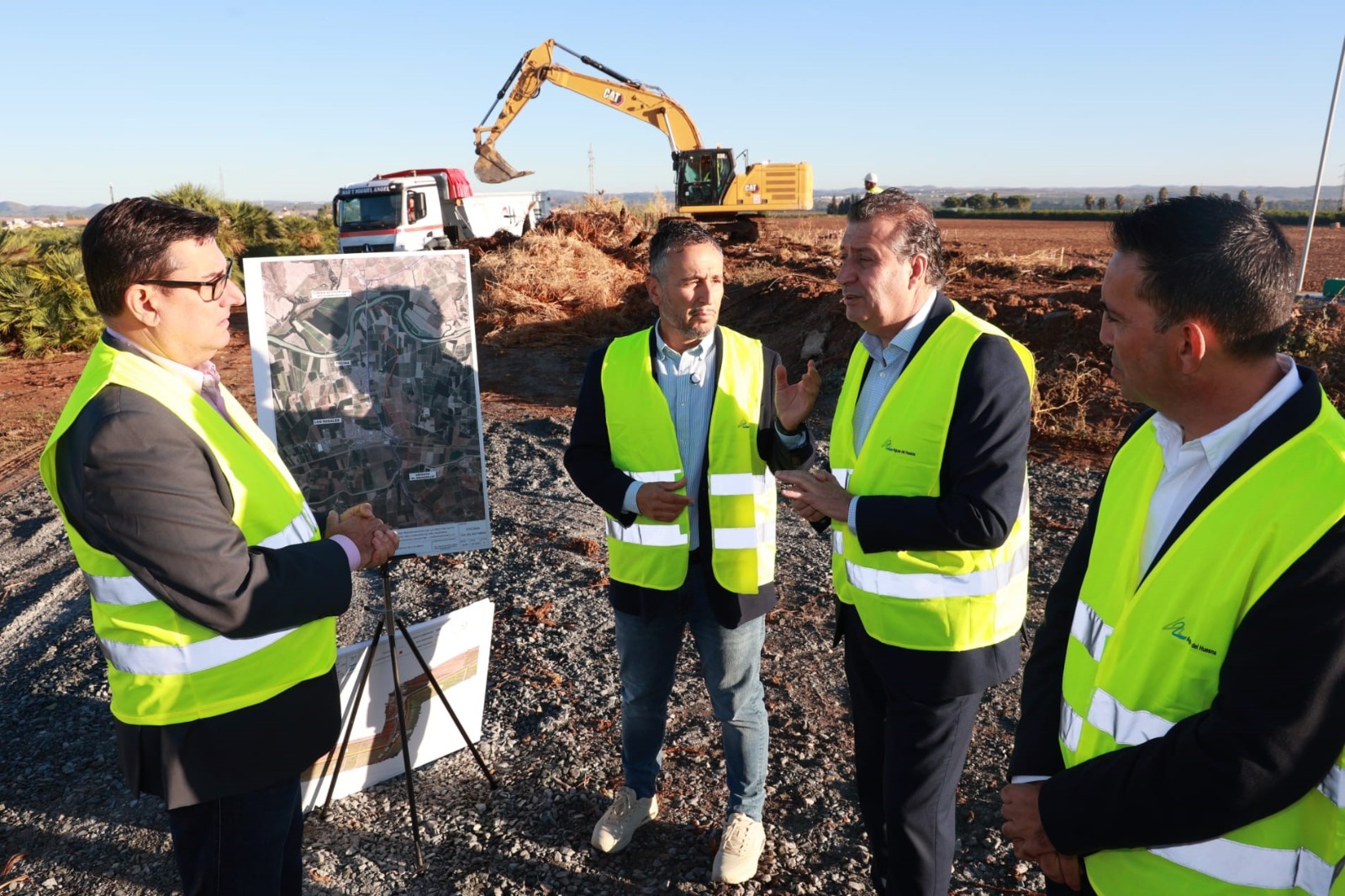
The high-level transport network of the Huesna System as it passes through Tocina and Los Rosales is going to change its route. The Diputación de Sevilla has awarded for 14.26 million euros the renewal and diversion of the main artery in the section between the Guadalquivir river and the El Granadillo area, which covers the municipal districts of Tocina and Villanueva del Río y Minas.
What changes for the municipality
The works move the pipeline out of the urban centre of Tocina and its expansion areas. The pipe that currently passes through the built-up area is replaced and diverted, which eliminates the risks in that area. The aim is to resolve the vulnerability of this northern sector of the infrastructure, which had been suffering recurring breakdowns.
The works began on October 12 and have an execution period of 16 months. According to the vice-president of the Consorcio de Aguas del Huesna, José María Villalobos, the solution adopted "moves the route outside the populated areas, guaranteeing continuous, accessible and safe operation for 250,000 people".
Almost 7.5 kilometres of new pipe
The project envisages the laying of almost 7.5 kilometres of new 1,300-millimetre-diameter helically welded steel pipe. The new pipeline will carry by gravity a flow of up to 1,590 litres per second from the Las Chimeneas drinking water treatment plant (ETAP) and will serve 250,000 residents in the province.
With the new route, more than 6.3 kilometres of the old reinforced concrete pipeline will be permanently taken out of service. To avoid affecting traffic or essential services, six horizontal underground borings will be made to cross the Sevilla-Madrid AVE line, the conventional railway network, the Canal del Bajo Guadalquivir and the SE-128, SE-900 and SE-3201 roads.
The network will have anti-corrosion protection by impressed current, automated overspeed and shut-off valves, and real-time integration with the central remote control system.
Action plan and background
The works are part of the Action Plan approved in 2025 by the Junta General de Aguas del Huesna, with technical and financial support from the Diputación. The president of the provincial institution, Javier Fernández, has stressed that it is an "absolutely necessary" project that responds to a commitment made. The mayor of Tocina, Francisco José Calvo, has recalled that since the first incident with the pipe he asked Huesna and the Diputación that the diversion had to take place, and has stated that the problem "is on the way to being solved".
The investment in the northern area is in addition to the one made recently in the Los Jinetes development, in Carmona, where 7.59 million euros were allocated to renew another 1,750 metres of the main artery.