
The Torre Mocha in Alcalá faces its final stretch with the roof already renewed
The works at the Castillo de Alcalá de Guadaíra, which began in summer and cost 249,000 euros, now focus on walls, drainage and stairs.
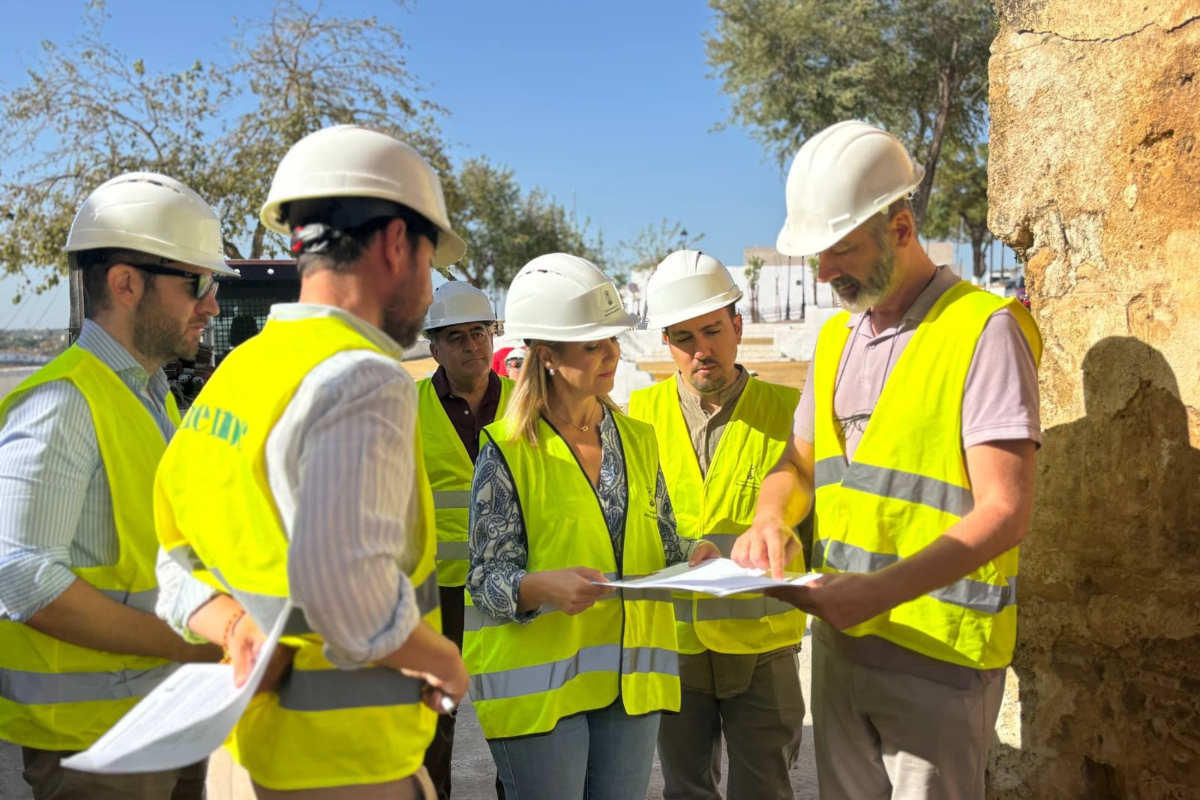
The restoration of the Torre Mocha and its surroundings in the Castillo de Alcalá de Guadaíra enters its decisive phase. According to the Ayuntamiento, the project, started in summer and budgeted at 249,000 euros, is scheduled to finish in December.
What is being done
The works aim to restore the integrity of one of the most recognisable spaces of the fortress. The intervention includes the structural consolidation of the tower and its alcazaba, the restoration of the curtain walls, the tower and the outer wall, and the adaptation of the interior spaces.
One of the most visible fronts is at the top of the Torre Mocha, used as a viewpoint. There the roof is being completely renewed, with a new waterproofing, slope and rainwater drainage system. The aim is to tackle the leaks that had been damaging walls and claddings.
The paving of the courtyard and interior routes is also being renewed, with new drainage to prevent water accumulation. On the walls, incompatible materials added in previous works are removed, cracks are repaired and the historic claddings are consolidated.
Stairs and safety
The two staircases in the enclosure will be affected. The one leading up to the viewpoint keeps its configuration and only the cladding of the steps changes, which will be natural stone. The one connecting to the liza is being rebuilt due to its deterioration and will incorporate a galvanised steel railing with a double handrail.
The project also includes cleaning of walls, courtyard, roof, stairs, paving and accesses, and the removal of vegetation and roots that accelerate the wear of the walls. Finally, fungicidal and water-repellent treatments will be applied.
A more legible enclosure
The differentiated treatment of paving and archaeological remains will make it possible to identify the layout of the old wall, the alcazaba, the outer wall and the Puerta de Santa María, without reconstructing disappeared elements. Before drafting the project, an archaeological intervention was carried out whose results were incorporated into the execution, authorised by the Comisión Provincial de Patrimonio Histórico de la Junta de Andalucía. All of it is part of the Plan Almena II (2019-2030).
The mayor, Ana Isabel Jiménez, stated during a visit to the works that it is "a fundamental intervention of restoration and recovery of such a symbolic part of the alcalareña fortress". The delegate of Culture, Heritage and Museums, Christopher Rivas, noted that the action "leads us to intervene at the other end of the fortress".