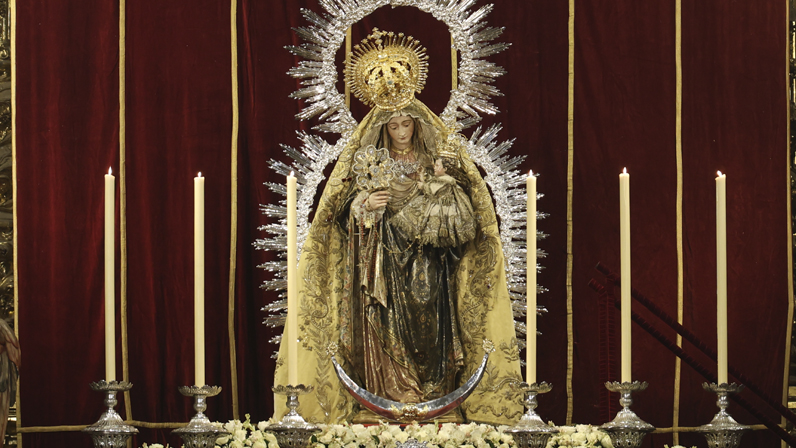
La Virgen del Amparo now wears its canonical crown in the Magdalena
The parish of Santa María Magdalena hosted the coronation of the image this Sunday, with the procession postponed to November 15 due to the rain.
YaSevilla newsroom ·
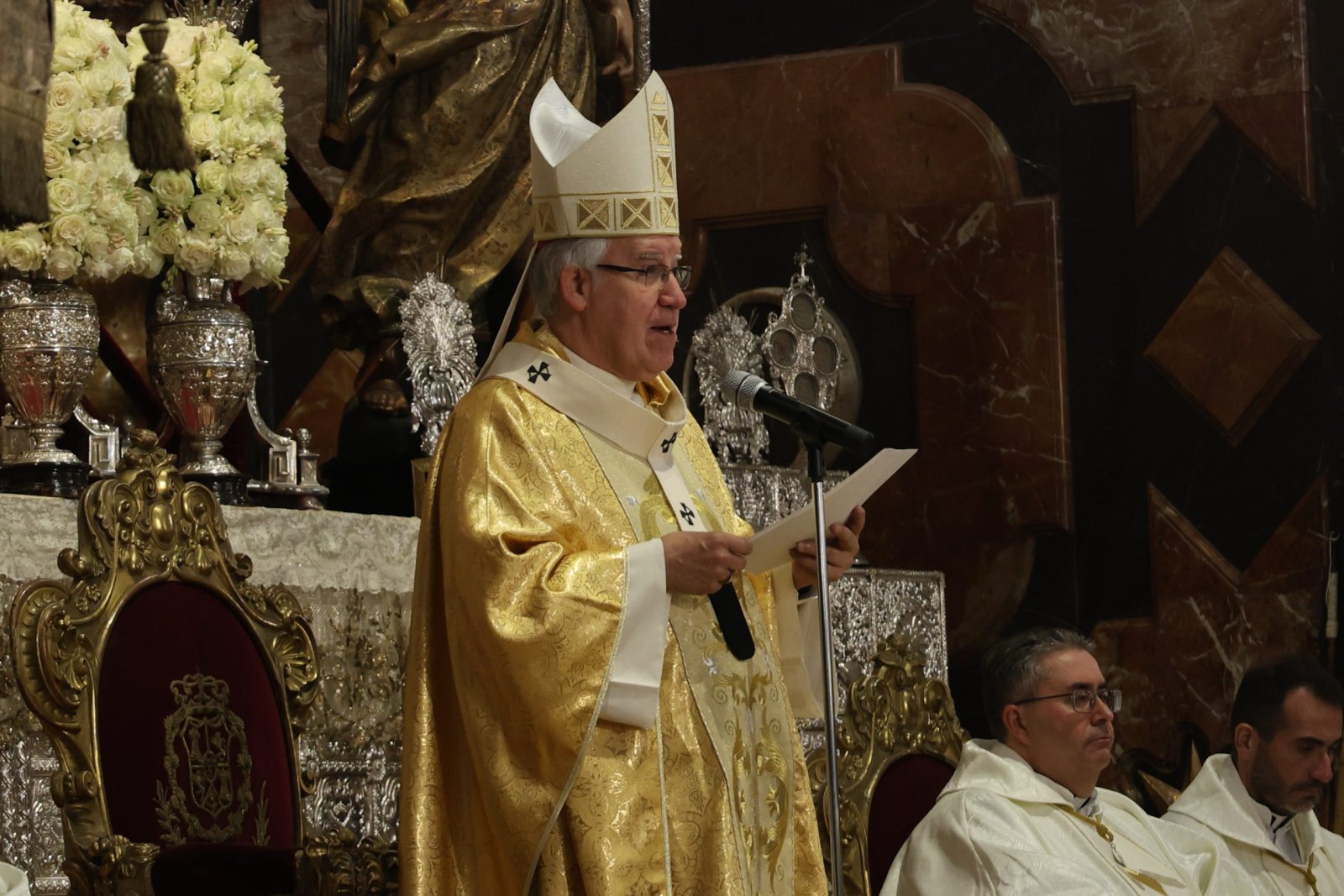
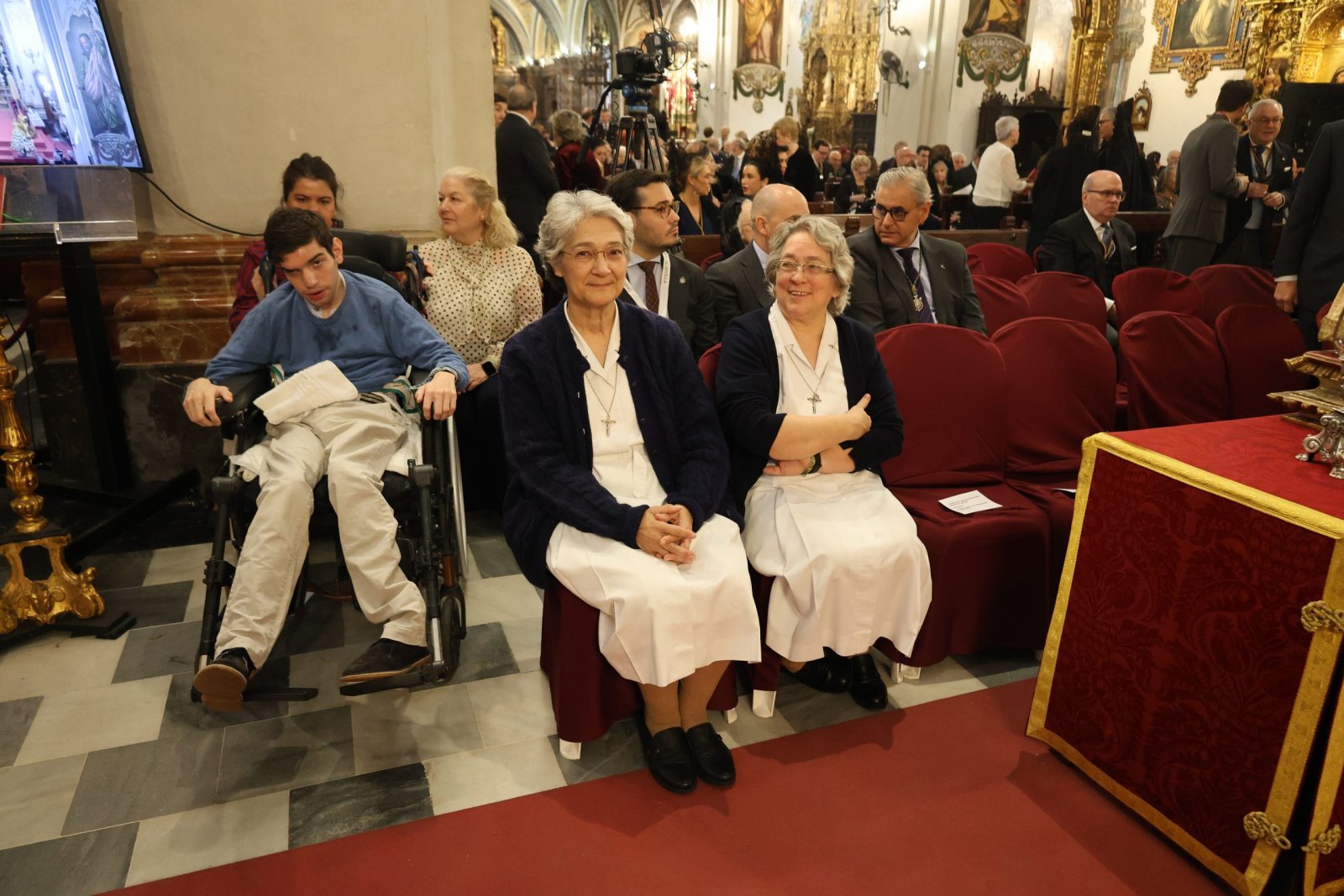
The image of Nuestra Señora del Amparo was canonically crowned this Sunday, November 8, at the Real Parroquia de Santa María Magdalena, in a ceremony presided over by the Archbishop of Seville, José Ángel Saiz Meneses. The event brought together civil authorities, with Mayor José Luis Sanz at the head, the governing board of the Hermandad del Amparo led by its sister superior Paquibel Ruiz, two nuns from the Institución Benéfica del Sagrado Corazón de Jesús (Regina Mundi), and around fifty brother superiors and representatives of other brotherhoods of the city.
The Eucharist was concelebrated by the parish priest of the Magdalena, Francisco Román, and about twenty priests. During the homily, the archbishop recalled that the coronation "adds nothing to the glory that God has already granted to Mary" and asked that it be translated into "more silent charity" and into a brotherhood that grows in spirituality, formation and charity.
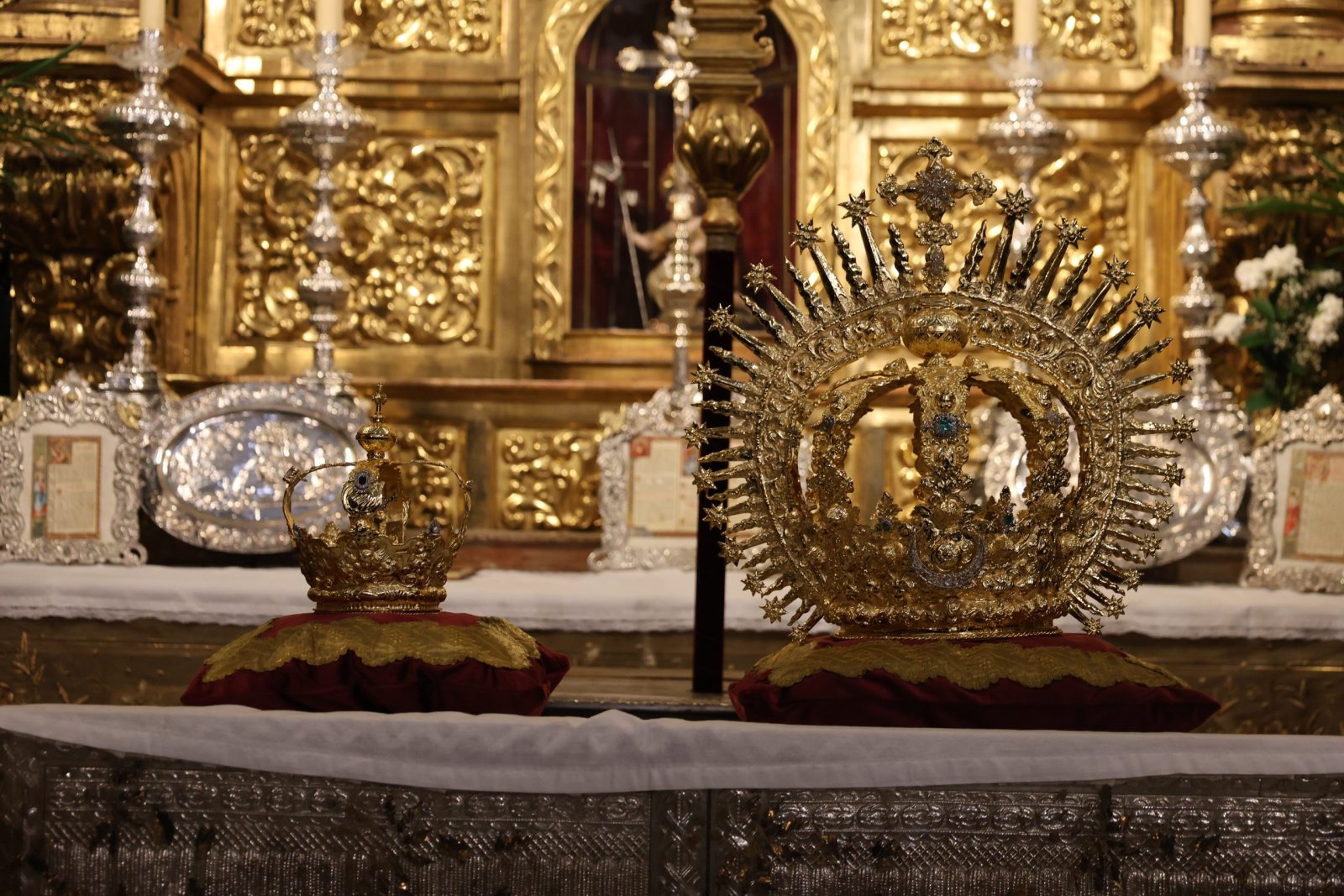
An 18th-century crown restored
Before crowning the image, the archbishop blessed the gilded silver crown from the early 18th century. The piece has been restored and a lower gold arch donated by the faithful has been added, along with some jewels from the Virgin's treasure, on the premise that this addition had to be reversible. The ceremony concluded with the signing of the record of the canonical coronation.
The brotherhood has linked the coronation to a social work with Regina Mundi, whose work for those most in need it will continue to support, as explained by its sister superior.
The procession, on November 15
Given the adverse weather forecasts, the brotherhood has postponed to Sunday, November 15, the procession that was scheduled for this Sunday after the ceremony. The corporation has its first rules approved in 1736 and, after the Lisbon earthquake of 1755, the parishioners and the brotherhood interpreted the absence of serious damage in the parish as maternal protection of the Virgin, since then the object of a vow of solemn worship.
Shall we let you know what matters?